Trans-species health: An aesthetic responsibility
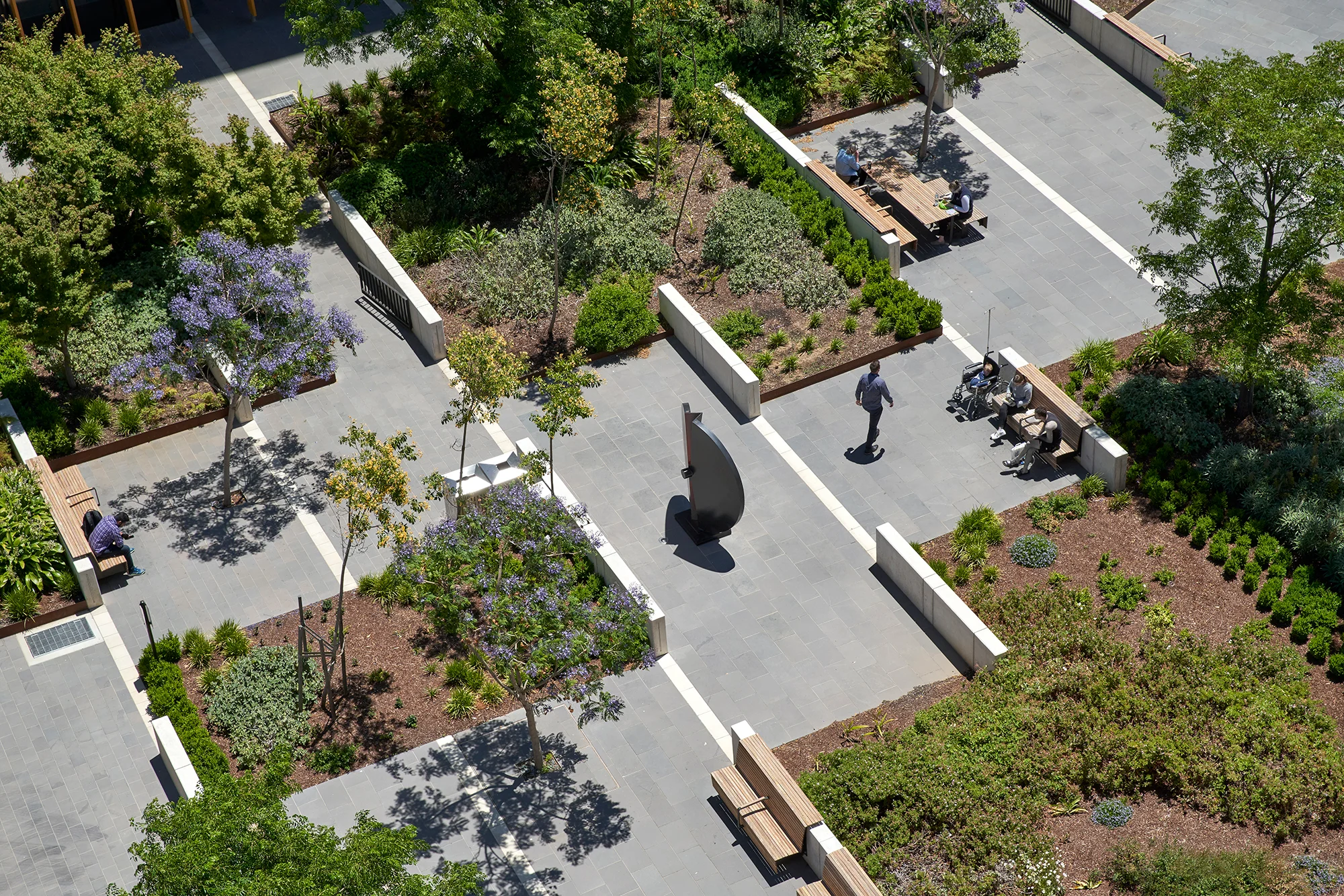
Bendigo Hospital. Photo: Peter Clarke.
In this article published on Foreground, Associate Director Claire Martin argues it’s time for landscape architects to take a trans-species approach to design.
The age of the Anthropocene, a period when human activity became a geological force on a planetary scale, continues to adversely impact the health of our world and everything that lives within it. As the United Nations has identified, health is both an outcome and a precondition of sustainable development. The many health challenges of global urbanisation — increased pollution, rising temperatures, reduced access to open space, the loss of vegetation, diminishing water and air quality, extreme weather-related disasters, and a global pandemic — can be seen as by-products of anthropocentric design and development.
As a designer I believe my role is to be projective — I can’t be fatalistic about the health of the world. Landscape architects and urban designers must work with ...
Continue reading via Foreground.